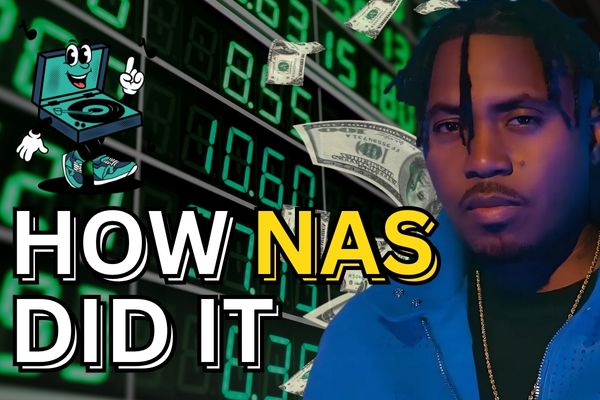
Nas: From Illmatic to a $100M Investment Empire
Nas has always been two things at once: a poet of the streets and a businessman of the future. From the moment Illmatic dropped in 1994, he was hailed as one of the greatest lyricists hip-hop had ever seen. His storytelling, his imagery, his ability to turn the pain and pride of Queensbridge into art — it made him a legend before he was even 21 years old.
But three decades later, what makes Nas even more remarkable isn’t just his music — it’s how he quietly became one of the smartest investors in hip-hop history.
While most rappers dream of platinum plaques, Nas dreamed of ownership, equity, and long-term wealth. His bets on early tech startups like Ring, Coinbase, Lyft, Dropbox, and Robinhood have turned into a portfolio worth tens of millions. Today, he’s as respected in Silicon Valley as he is in the studio.
This is the story of how Nas turned poetic vision into venture capital success — and built one of hip-hop’s most forward-thinking business empires.
The Birth of a Legend: Illmatic
In April 1994, Nas released his debut album, Illmatic. It sold only around 60,000 copies in its first week and peaked at No. 12 on the Billboard 200. Commercially, it wasn’t a blockbuster — but critically, it was a masterpiece.
Illmatic received a rare five-mic rating in The Source magazine and introduced the world to songs like “N.Y. State of Mind,” “The World Is Yours,” and “Halftime.” Backed by legendary producers like DJ Premier, Large Professor, Pete Rock, and Q-Tip, Nas created an album that felt like cinematic poetry.
He wasn’t chasing radio hits. He was building credibility — the kind that would last decades. In 2021, Illmatic was added to the Library of Congress’s National Recording Registry, cementing its place as one of the greatest albums in hip-hop history.
That early authenticity would become the foundation for everything Nas did next — both in music and in business.
From the Streets to the Charts
Two years later, Nas released It Was Written (1996). This time, he aimed for mainstream success — and nailed it. The album debuted at No. 1 on the Billboard 200, selling 270,000 copies in its first week and going double platinum. With hits like “If I Ruled the World” featuring Lauryn Hill, Nas proved he could balance artistry with commercial reach.
The late 1990s brought turbulence. His feud with Jay-Z produced one of hip-hop’s most iconic diss tracks — “Ether.” The battle kept him relevant and reminded the world that Nas was built for longevity.
Albums like Stillmatic (2001), God’s Son (2002), and Hip Hop Is Dead (2006) solidified that status. And remarkably, nearly 30 years after his debut, Nas was still earning accolades. In 2021, he won his first-ever Grammy for Best Rap Album with King’s Disease. That kind of sustained excellence is almost unheard of in hip-hop.
But even as he dominated the mic, Nas was building something even bigger offstage.
The Birth of QueensBridge Venture Partners
In 2014, Nas co-founded QueensBridge Venture Partners (QBVP), named after his childhood neighborhood in Queensbridge, New York. The firm focused on early-stage investments in tech startups — companies that were small, risky, and full of potential.
One of the first and biggest wins came with Ring, the smart doorbell company. Nas invested before the world knew what it was. In 2018, Amazon acquired Ring for over $1 billion. Reports estimated that Nas personally earned tens of millions from the deal.
Another major success came with Coinbase, the cryptocurrency exchange. Nas invested early, when crypto was still considered a niche experiment. When Coinbase went public in 2021 at a valuation near $100 billion, his shares were reportedly worth over $40 million.
And those are just two of more than 100 investments QBVP has made. The firm’s portfolio includes:
-
Lyft – ride-sharing giant that IPO’d in 2019 at a $24 billion valuation
-
Dropbox – IPO’d in 2018, valued around $8 billion
-
Robinhood – trading app that went public in 2021 at $32 billion
-
Pluto TV – sold to Viacom for $340 million
-
SeatGeek – ticketing platform turned billion-dollar brand
-
Genius – the hip-hop lyric platform turned cultural hub
While most artists chase endorsement deals, Nas went after ownership. When these companies went public or got acquired, he didn’t get a one-time check — he got a share of the company’s growth.
The Quiet Investor
A lot of rappers have tried to break into business, but few have succeeded at this level. Nas’s strategy worked because he focused on three key principles:
-
Partner with experts. QueensBridge Venture Partners employed real venture capital professionals. They sourced deals, vetted startups, and handled the details — allowing Nas to invest intelligently without pretending to be an expert.
-
Invest early. The biggest VC returns come from backing companies before they’re famous. Nas didn’t wait for proven success — he bet on vision.
-
Move in silence. While others broadcast their business moves for clout, Nas stayed quiet. When Amazon bought Ring or Coinbase went public, the headlines spoke for him.
That discipline set him apart. Nas wasn’t chasing quick money — he was building generational wealth.
Building His Own Brands: Mass Appeal
Nas didn’t stop at investing in others’ ideas — he built his own. In 2013, he co-founded Mass Appeal, a hybrid media company and record label.
Mass Appeal Records signed artists like Dave East, Run the Jewels, and DJ Shadow. The company also became a force in media production, creating acclaimed documentaries like Wu-Tang: Of Mics and Men and Rapture on Netflix.
In 2023, Mass Appeal formed a strategic partnership with Universal Music Group, expanding its reach across music and film. While it’s not a billion-dollar play like Ring or Coinbase, it reflects Nas’s ability to scale creative ventures into sustainable businesses.
The Music Never Stopped
Despite his business ventures, Nas never stepped away from music. His King’s Disease trilogy with producer Hit-Boy revitalized his sound and earned him that long-awaited Grammy. In 2025, he teamed up with DJ Premier for a collaborative project, reminding fans that he’s still sharp, relevant, and passionate about the craft.
For an artist whose career began in the early ’90s, that level of consistency is rare. Nas exists in a unique space — part legacy act, part active innovator.
The Value of the Nas Portfolio
Estimates often place Nas’s net worth around $70 million, but that likely undersells him. Venture capital holdings are notoriously hard to value. If even a fraction of his 100+ investments continue to succeed, his real wealth could easily exceed nine figures.
Coinbase alone reportedly gave him a $40 million payday. Add in his stake in Ring, Pluto TV, and other exits, and it’s clear why Nas stands apart from most of his peers.
The Blueprint
Nas’s path from Queensbridge to Silicon Valley offers a playbook that any artist — or entrepreneur — can learn from:
-
Build credibility before cashing in.
-
Partner with people who know more than you.
-
Invest early, not when it’s safe.
-
Diversify your reach — from music to media to venture capital.
-
Let results speak louder than press releases.
Nas isn’t the flashiest or richest rapper in the game. But he might be the most balanced — respected in hip-hop, respected in business, and still growing three decades later.
Conclusion
From the streets of Queensbridge to the boardrooms of Silicon Valley, Nas has proven that hip-hop can produce more than stars — it can produce moguls. His story isn’t just about money. It’s about evolution, credibility, and ownership.
Nas built his empire the same way he built Illmatic: with vision, discipline, and authenticity. And as the lines between culture and capital continue to blur, his example might just be the one future artists study most.
Enjoyed this breakdown? Explore more deep dives into music, money, and the moves that shape the industry. Discover stories behind the hits and the strategies that make them.